
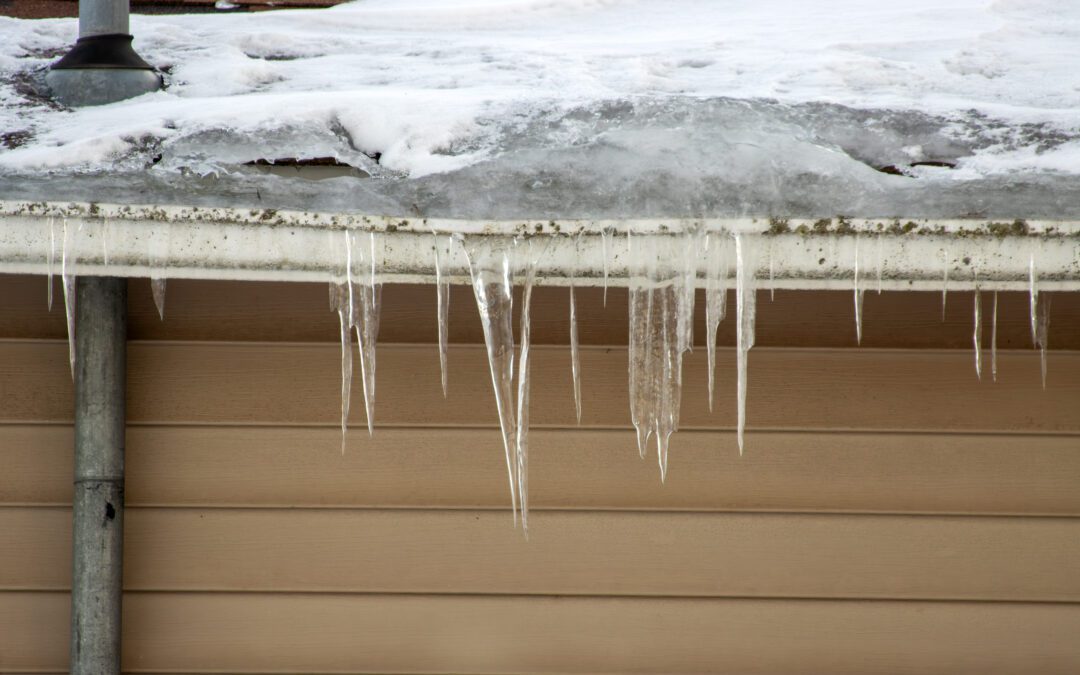
Winter gutter problems can become obvious fast. Standing water can become ice, a partly clogged downspout can stop moving meltwater, and a weak hanger may become obvious once snow and ice add weight.
At Maine Gutter Works, we treat winter gutter problems as symptoms first. The useful question is not just what froze. It is what caused water to slow down, back up, leak, or refreeze in that location.
Winter Gutter Problems: A Quick Symptom Guide
What you see
Possible cause
Water spilling over the gutter edge
Debris, frozen outlet, frozen downspout, poor pitch, or limited capacity
Drip at one corner
Joint or seal issue, standing water, or freeze-thaw stress
Solid ice in the gutter
Standing water, blocked drainage, repeated melt and refreeze
Downspout not flowing
Frozen outlet, frozen elbow, debris, or snow blocking discharge
Gutter sagging or pulling away
Ice or snow load, failed hanger, weak fascia, or prior damage
Long icicles at one roof edge
Meltwater refreezing at a colder edge, sometimes with ice-dam conditions
Ice across a driveway or walkway
Downspout discharge reaching pavement and refreezing
These are clues, not diagnoses. One symptom can have more than one cause.
Leaking Gutters in Winter: Start With Where the Water Appears
Leaking gutters in winter can mean several different things.
If water drips from one corner during a thaw, the joint or seal may need attention. If water appears behind the gutter, the problem may involve the roof edge, fascia, or an ice dam. If water pours over the front edge, the gutter may be blocked or unable to move meltwater to the outlet fast enough.
Cold weather can expose a weakness that was already present. Standing water expands when it freezes, and debris holds moisture in place. A gutter that is slightly out of pitch may collect water in the same low spot again and again.
If leaking gutters in winter only show up during a thaw or after a hard freeze, the timing can help narrow down the cause. Take a ground-level photo when the problem is visible.
Why Gutters Overflow During Winter Thaws
A winter overflow does not always mean the gutter is too small.
Leaves, pine needles, roof grit, or frozen debris can block an outlet. A downspout can freeze farther down the line, causing water to back up. Poor pitch can leave standing water that freezes before the next thaw. A roof valley can also send concentrated meltwater toward one short section.
If a clean gutter overflows in the same spot during repeated thaws, the next step is to inspect pitch, outlet location, downspout flow, and the roof area feeding that run.
Our gutter pitch guide explains why low spots matter year-round. In winter, those low spots are easier to see because the water that failed to drain can freeze in place.
Frozen Downspouts Can Start at the Outlet, Elbow, or Ground
A frozen downspout does not always freeze from top to bottom.
The outlet can become restricted by debris and then freeze. Elbows can become choke points. The lower end can be buried in a snowbank or frozen into packed snow. A discharge extension can also create a low area where water sits and refreezes.
When the downspout stops flowing, meltwater can back up into the gutter even if the gutter itself is clear.
Do not try to solve a frozen downspout with a torch, open flame, or aggressive hammering. If the same downspout freezes every winter, the better answer may be changing the drainage path rather than repeatedly thawing it.
Sagging or Pulling Away Is More Than a Cosmetic Problem
Snow and ice add weight to a gutter system. If a run is already loose, poorly supported, or attached to weak fascia, winter can make that weakness more visible.
One sagging section may point to a local hanger or mounting problem. A gutter pulling away in several places suggests a broader support or fascia issue. Either way, the changed shape can alter pitch and create a new low spot where water collects.
Do not stand beneath a heavily iced gutter or try to knock a large mass of ice loose. If the gutter is visibly separating from the house, especially above an entrance or walkway, it deserves attention.
Icicles Are Not the Same Thing as Ice Dams
Icicles show that liquid water reached a cold area and froze. An ice dam is a buildup of ice at the roof edge that blocks meltwater and can allow water to back up under roofing.
The two can appear together, but one icicle does not automatically prove that you have an ice dam.
The Building America Solution Center explains that ice dams commonly begin when heat from the home warms part of the snow-covered roof. Meltwater moves toward the colder eave and refreezes. Long-term prevention focuses on reducing that heat transfer through air sealing, insulation, and an appropriate roof assembly.
Gutters do not create the heat loss that starts the process. They matter once meltwater reaches the edge. Clogged outlets, standing water, and poor discharge can make secondary icing worse.
Our ice dam prevention guide explains where gutters fit into that larger problem.
Driveway and Walkway Ice Often Starts With Discharge
A gutter system can drain correctly and still create a winter problem if the downspout ends in the wrong place.
This is common around garages. During a thaw, meltwater may run onto the pavement. When the temperature drops again, that water can refreeze where people walk or park.
If driveway ice appears in the same line below a downspout after every thaw, the solution may be a discharge change rather than a new gutter system.
Our downspout placement guide covers this problem in more detail.
What You Can Safely Check From the Ground
A ground-level walk-around can tell you quite a bit.
Look for which downspouts are flowing during a thaw, where icicles form, whether overflow is limited to one section, whether a gutter visibly sags, and where discharge reaches the ground. If one run is full of ice while the others are clear, note what is different about that roofline, outlet, or exposure.
Photos are helpful. Capture the full roof edge and the ground below it, not just a close-up of the ice. Do not climb onto a snowy roof or icy ladder to investigate.
What Can Wait for a Thaw, and What Deserves a Call
Some winter gutter problems can wait for safer conditions. Others should not be ignored.
Routine cleaning, minor debris high in an otherwise draining system, or cosmetic icicles with no active leak may be reasonable to address when access improves.
Call sooner if the gutter is pulling away, a large ice mass hangs over an entrance, water is entering the home or behind the roof edge, a downspout is creating dangerous walkway or driveway ice, or an electrical heating cable appears damaged.
The Consumer Product Safety Commission recommends replacing heating cable that shows deterioration such as cuts, bare wires, charring, or damaged insulation.
If you are unsure, send ground-level photos and describe when the problem appears. That can help determine whether the issue is urgent.
Where Gutter Heaters Fit
A gutter heater can be useful when a specific drainage path repeatedly freezes after the basic system is already working correctly.
It is not a cure for debris, poor pitch, a damaged gutter, bad discharge, or heat-loss-driven ice dams. We use heating cable as a targeted second layer when the site conditions justify it.
Editorial note: Once Blog 1 is published, link the phrase “gutter heaters vs. heat tape guide” to its final URL.
Winter Gutter Problems: Frequently Asked Questions
Why do my gutters leak only in winter?
Cold weather can expose standing water, a weak seal, or an ice blockage that is not obvious in warm weather. The leak may also be water backing up from the roof edge rather than coming through the gutter itself.
Can a frozen downspout damage gutters?
A frozen downspout can block the exit path and cause water to back up. Added ice weight and repeated freezing can also stress a system that is already loose or poorly supported.
Should I break ice out of my gutters?
Avoid striking or prying large ice masses from the gutter. That can damage the gutter and create falling-ice hazards. If the buildup is significant, wait for safer conditions or call for professional help.
Why does one gutter freeze while another does not?
Differences in shade, roof runoff, pitch, outlet placement, debris, and downspout routing can make one section freeze before another.
Why is my driveway icing below the gutter?
If a downspout releases meltwater onto pavement, that water can refreeze when temperatures fall. Changing the discharge route may help move water away from the traffic area.
Show Us What Winter Is Doing to the System
Winter gutter problems are easier to solve when we can see the pattern. A leak at one corner, a frozen outlet, a sagging run, and a driveway that ices below one downspout all point to different starting places.
Maine Gutter Works serves Central and Southern Maine with gutter cleaning, repair and adjustment assessments, seamless installation, gutter guards, and gutter heaters. We can review the roof edge, drainage path, and winter trouble spot and explain what needs attention now and what can wait.
Start with our gutter services page or review our gutter cleaning service if debris appears to be the main problem. Send ground-level photos if the issue is visible. You do not need to climb a ladder to help us understand what is happening.
Recent Comments