
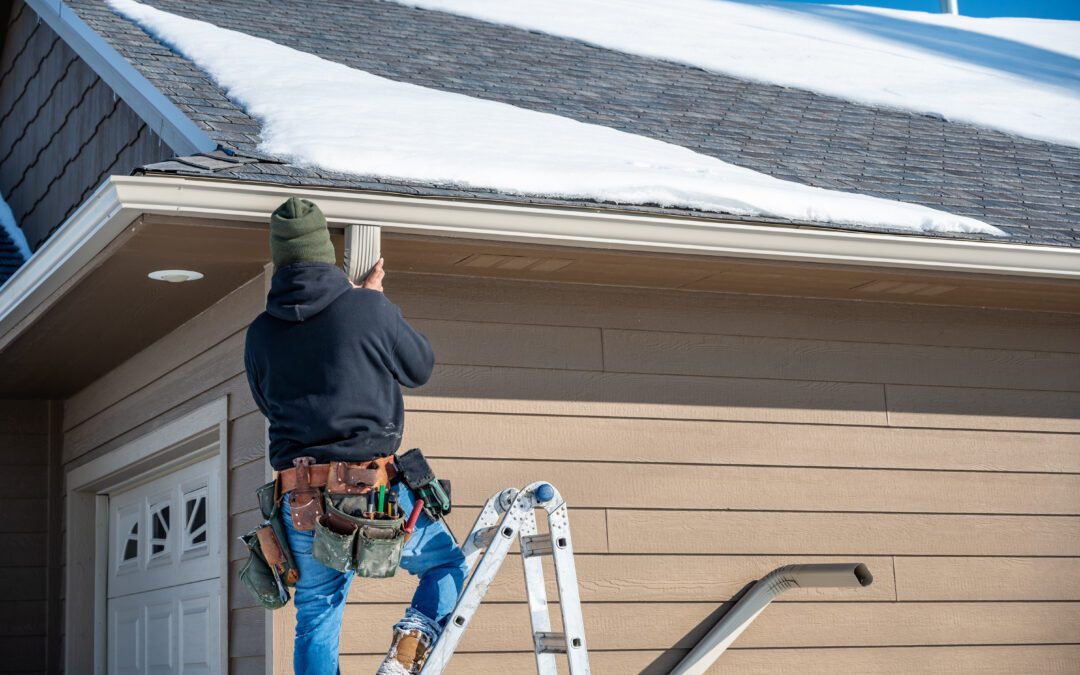
When you search for a gutter installer near me, you are usually past the casual research stage. Something is dripping where it should not. A basement corner is damp. A gutter is sagging. Water is pouring over a valley. The garage apron turns into ice during winter thaws. Or the old sectional system has been patched so many times that another repair feels like throwing money at the same problem.
That is why this guide is not a generic lesson about gutters. It is a homeowner’s masterclass in choosing the right pro.
We install seamless gutter systems across Central and Southern Maine, but the vetting process in this guide can help homeowners anywhere compare local gutter companies with more confidence. We will walk through how to build a shortlist, how to compare estimates, what questions to ask, what red flags to avoid, and how to tell whether an installer understands the full water path from roofline to downspout discharge.
The goal is simple: help you hire a gutter company that solves the problem instead of just hanging new metal where the old metal used to be.
If you are in our service area and already want a professional walk-around, start with our seamless gutter services. If you are still comparing options, use this guide as your checklist.
Table of Contents
- What people really mean when they search “gutter installer near me”
- How to build a shortlist of gutter companies near you
- The 7 trust signals that separate real pros from risky bids
- What a good gutter estimate should include
- When to search for a seamless gutter installer near you
- How to compare rain gutter installers by workmanship
- Why local weather matters more than national advice
- How to understand price without choosing the cheapest bid
- Red flags to catch before you sign
- Contracts, insurance, safety, and older-home concerns
- What install day should look like
- A homeowner scorecard for comparing gutter installers near you
- FAQ: Hiring a gutter installer near you
- How to schedule a better estimate
What People Really Mean When They Search “Gutter Installer Near Me”
A “near me” search is not just a search for proximity. It is a search for trust.
When homeowners search “gutter installer near me,” “gutter installers near me,” or “gutter companies near me,” they are usually trying to answer a few practical questions at once:
- Who actually serves my area?
- Who can look at my specific roofline?
- Who has real local reviews?
- Who installs gutters as a specialty, not as an afterthought?
- Who can tell me why my current system is failing?
- Who will give me a clear estimate instead of a vague promise?
Search results can make that harder than it sounds. You may see ads, map listings, directories, lead-generation websites, national comparison articles, and a few local company pages mixed together. Some of those results are useful. Some are just designed to collect your information and sell the lead.
That does not mean directories are bad. A BBB profile, Google Business Profile, review platform, or local referral can help you build a starting list. But no listing should replace your own vetting process. A company can appear in search and still be the wrong fit for your home, your roofline, your water problem, or your budget.
The best way to use search results is to treat them as a first filter, not a final answer.
Start by looking for companies that make their service area clear, show actual gutter work, explain their process, and give you a way to speak with a real person. Then move from “Who shows up?” to “Who can explain the right solution?”
That shift matters because gutters are not just trim. They are part of your home’s water-management system. A good installer thinks about roof planes, pitch, valleys, outlets, downspouts, fascia, discharge zones, snow, ice, debris, and the way water behaves after it leaves the roof. A weaker installer may only quote a linear-foot price and copy the old layout, even if the old layout caused the problem.
That is why we recommend reading local gutter content, not just browsing ratings. For example, our guides on how to vet a gutter company and questions smart homeowners ask are built around the same idea: the best estimate is the one that explains the system.
Step 1: Build a Shortlist of Gutter Companies Near Me Without Falling for Ads Alone
The first step is not calling every company you find. It is building a shortlist that is worth your time.
When comparing gutter companies near me, start with local proof. A strong local gutter company should make its service area easy to understand. It should have a real business presence, clear contact information, project photos or service details, and enough online reputation to give you a feel for how it treats homeowners.
That does not mean you need a huge national brand. In many cases, a focused local specialist is a better fit than a company that treats gutters as one small add-on among many unrelated services. The right rain gutter installers should be able to talk comfortably about pitch, hangers, downspouts, outlets, fascia, and discharge. They should also be able to explain why they recommend a certain layout for your home.
Start with local proof, not just the top result
Search ranking matters, but it is not the same thing as workmanship. Ads can push one company to the top. Directories can dominate results. Lead-generation pages can look local even when the company behind them is not the one doing the work.
Before you call, look for signs that the company is genuinely local or clearly serves your area:
- Does the website name the cities, towns, or regions served?
- Do reviews mention nearby towns?
- Are photos and service descriptions specific enough to feel real?
- Does the company explain what it installs?
- Can you tell whether they do seamless gutters, sectional gutters, gutter guards, cleaning, repair, or replacement?
- Is there a clear path to request an estimate?
For Maine homeowners, we try to make this simple. Our services page outlines our seamless gutter installation, gutter guard, and cleaning services so you can tell quickly whether we are a fit.
Use directories carefully
Directories can help you find names, but they should not do your thinking for you. A profile, rating, or badge is one data point. It does not tell you whether the company will design the right downspout plan, explain the warranty, protect your property, or show up when it says it will.
Use directories to gather possibilities, then look for deeper signals:
- Recent local reviews
- Clear business information
- References or examples of work
- A written estimate process
- A real explanation of materials and scope
- No pattern of unresolved complaints
The same goes for “best gutter company” lists. They can be useful, but many are built for broad national comparisons. A national list cannot see your garage line, your roof valley, your basement corner, or the driveway ice that shows up after a January thaw.
Ask neighbors, but still verify
A neighbor referral is one of the best ways to find rain gutter installers, but it still needs context. Your neighbor’s home may have a simpler roof, easier access, fewer trees, or a different drainage problem.
Use referrals to ask better questions:
- What work did they do?
- Was the estimate clear?
- Did they explain the downspout layout?
- Did they clean up well?
- Did the gutters perform through the next few storms?
- Would you hire them again?
If the referral sounds strong, add that company to your shortlist. Then vet them the same way you would vet any other contractor.
If you are in Central or Southern Maine, we are happy to be one of the companies you compare. Use this guide, bring your questions, and start with our seamless gutter services when you are ready for a walk-around.
Step 2: Check the 7 Trust Signals That Separate Real Pros from Risky Bids
Once you have a shortlist, the next step is separating polished sales language from real trust.
A reliable gutter installer near me should do more than say, “We install gutters.” They should be able to explain the scope, prove they are legitimate, answer questions clearly, and give you confidence that the system will be installed with care.
Here are the seven trust signals we recommend checking before you hire any rain gutter installer.
1. Clear insurance and business legitimacy
Ask whether the company carries liability insurance. Depending on your area and the type of crew, worker coverage may also matter. You do not need to interrogate a good contractor, but you should feel comfortable asking for proof that they are operating professionally.
A trustworthy company should not act offended when you ask. Insurance protects the homeowner, the crew, and the business. It is part of doing real work on real homes.
If you are comparing multiple gutter companies near me, make this one of your standard questions. It keeps the conversation grounded and prevents you from comparing a professional operation to a risky low bid that may not carry the same protections.
2. A written estimate that explains the work

American home gutter protection system featuring white guards and soffit
A one-line estimate that says “install gutters” is not enough.
A good estimate should explain what is included. At minimum, it should make the materials, general layout, downspouts, removal, cleanup, and warranty expectations clear. It should also flag anything that may affect the final scope, such as soft fascia, access limits, unusually complex rooflines, or optional gutter guards.
This matters because two quotes can look very different while covering different work. One may include downspouts, disposal, and a careful discharge plan. Another may be cheaper because it leaves those details vague.
Before choosing the lower number, ask what is included. A clear written scope protects everyone.
3. Recent local references or review patterns
Reviews are useful, but do not stop at the star rating. Read the words.
Look for patterns around communication, punctuality, cleanup, workmanship, and follow-through. A few imperfect reviews are not always a dealbreaker, especially if the company responds professionally. Repeated complaints about leaks, missed appointments, surprise charges, or poor communication deserve more caution.
If the project is large or complex, ask whether the company can point to recent local work or references. The most useful references are not just “Were you happy?” They answer questions like:
- Did the crew explain the plan?
- Did the final work match the estimate?
- Did the system perform after rain?
- Was the yard cleaned up?
- Would you hire them again?
Those answers tell you more than a polished slogan.
4. A clear warranty explanation
A warranty is only helpful if you understand what it covers.
Ask the installer to separate labor coverage from any manufacturer finish or material coverage. Ask who you call if there is a leak, sag, finish issue, or downspout problem. Ask what voids the warranty. Ask whether cleaning, storm damage, ice damage, fascia failure, or homeowner modifications are excluded.
A good contractor should answer in plain language. You should not have to guess what happens if something needs attention later.
This is especially important with seamless gutters because homeowners sometimes assume “seamless” means “no leak points.” Seamless runs reduce mid-run joints, but there are still corners, outlets, end caps, and downspout transitions. Workmanship still matters.
5. Photos or examples of completed work
You can learn a lot by looking at finished gutter work.
Straight runs should look clean and intentional. Corners should look tight. Downspouts should be secured. Discharge should make sense. The system should look like it belongs on the home, not like it was forced into place.
Ask to see examples if you are unsure. You are not looking for staged perfection. You are looking for proof that the company cares about details.
If you see sloppy corners, heavy exterior sealant used to hide poor fit, crooked runs, unsupported downspouts, or discharge that dumps straight onto walkways, ask more questions.
6. A safety-conscious crew
Gutter installation involves ladders, roof edges, tools, old materials, and work around landscaping, siding, driveways, and entrances. A professional crew should have a clear approach to safety and property protection.
You do not need a technical safety lecture. You do want to hear that the company thinks about ladder setup, crew safety, access, cleanup, and keeping your property orderly during the project.
This is one reason the cheapest bid is not always the best bid. Safety, insurance, cleanup, and skilled labor all cost money. Cutting those corners can create risk that does not show up in the first number.
7. Willingness to explain tradeoffs
The best gutter installers do not treat every home the same.
They should be willing to explain tradeoffs like:
- Seamless vs. sectional gutters
- 5-inch vs. 6-inch gutters
- Repair vs. replacement
- Standard downspouts vs. larger downspouts
- Gutter guards vs. seasonal cleaning
- Adding an outlet vs. forcing water to travel farther
- Moving discharge vs. copying the old layout
This is where a true specialist stands out. If a company cannot explain why it recommends a certain system, it may be quoting from habit instead of diagnosing the home.
During our estimates, we want homeowners to understand the plan before the work begins. That includes the gutter runs, downspout locations, discharge zones, and any maintenance concerns we can see from the ground. If you want to compare us with other gutter companies near me searches in Central or Southern Maine, start with a free estimate request through our services page and bring the questions in this guide.
Step 3: Know What a Good Gutter Estimate Should Include
A good estimate should do more than give you a number. It should show you what the company actually plans to do.
This is where many homeowners get stuck when comparing a gutter installer near me search result against another local quote. One price looks lower, but the estimate may not include the same scope. Another price looks higher, but it may include removal, better downspout placement, safer discharge, stronger fasteners, fascia notes, cleanup, or a clearer warranty.
That is why we recommend comparing scope first and price second.
A clear gutter estimate should answer these questions:
-
- What material is being installed?
- Is the system seamless or sectional?
- What gutter size and style are being used?
- How many downspouts are included?
- Where will the downspouts be placed?
- Where will the downspouts discharge?
- Is old gutter removal included?
- Is haul-away included?
- What happens if the fascia is soft, rotted, or uneven?
- What fasteners or hangers are being used?
- Is gutter guard installation included or optional?
- What warranty applies to labor, material, and finish?
- What is the payment schedule?
- What does the homeowner need to do before install day?
If an estimate does not answer those questions, ask for clarification before you sign.
Why vague estimates cause problems
A vague estimate creates room for confusion. “Install gutters” might mean very different things from one company to the next. One company may include downspouts and removal. Another may not. One company may plan a new outlet near a valley. Another may simply copy the old layout. One company may flag fascia issues before work begins. Another may discover the problem halfway through the job.
This is why low quotes can be misleading. A low price can reflect efficiency and fair pricing, but it can also mean important details were left out.
A strong written scope protects both the homeowner and the contractor. It gives everyone the same reference point before work begins. It also makes it much easier to compare gutter companies near me in a fair, practical way.
What a better estimate sounds like
A better estimate should explain the plan in plain language.
For example:
“We recommend seamless aluminum gutters on these rooflines, with downspouts placed at these locations. The garage run needs special attention because water is currently discharging onto the driveway. We will remove and dispose of the old gutters, inspect the fascia as we go, and let you know if we find mounting issues before proceeding.”
That kind of answer tells you the installer is thinking beyond linear footage. They are looking at how water moves.
A weak answer sounds more like:
“We will replace what is there.”
That may be fine if the old layout worked perfectly. But if you are calling because of overflow, leaks, splashback, or driveway ice, copying the old layout may copy the old problem.
Compare quotes by scope, not just price
If you are gathering multiple estimates, try to make them comparable. Ask each company the same core questions. Then look at what is included, not only what the bottom line says.
A useful quote comparison should include:
| Estimate item | Company A | Company B | Company C |
|---|---|---|---|
| Seamless or sectional? | |||
| Material specified? | |||
| Downspouts included? | |||
| Discharge plan explained? | |||
| Old gutter removal included? | |||
| Fascia concerns addressed? | |||
| Warranty explained? | |||
| Cleanup included? |
Download the Quote Scope PDF Here
This is one of the simplest ways to avoid choosing a quote that looks good on paper but leaves important work undefined.
The Federal Trade Commission recommends getting written estimates and being cautious with contractors who pressure you, demand full payment up front, or resist clear written terms. Their home improvement scam guidance is a good resource for any homeowner comparing contractors.
For a homeowner-specific view of what happens after you request an estimate, our installation timeline guide walks through the process from first contact to install day. You can also review our seamless gutter installation process if you want to know how we think through layout, flow, and cleanup.
If you are ready for a clear, site-specific scope in Central or Southern Maine, start with our seamless gutter services. We would rather explain the plan up front than surprise you later.
Step 4: Ask Whether You Need a Seamless Gutter Installer Near Me
When homeowners search for a seamless gutter installer near me, they usually want fewer leaks, cleaner lines, and a system that looks built for the home instead of pieced together from short sections.
That is the right instinct, but it needs one important caveat: seamless gutters are only as good as the installer.
“Seamless” means the straight gutter runs are formed in long continuous lengths, often on-site, instead of being assembled from many shorter sections. That reduces the number of mid-run joints. Fewer joints can mean fewer common leak points and fewer places for debris to catch.
But seamless does not mean joint-free. Every system still has corners, outlets, end caps, and downspout transitions. Those details still require careful workmanship.
What seamless gutters actually solve
Seamless gutters can be a strong choice when:
- Long runs have repeated seam leaks.
- The old sectional system is sagging or separating.
- You want a cleaner look along the roofline.
- Debris keeps catching at joints.
- The home has custom rooflines that need measured, fitted runs.
- You want a system designed as one layout instead of patched together over time.
This is why “seamless gutters near me” is such a common search. Homeowners are often trying to move away from a system that has become a cycle of leaks and repairs.
That said, a seamless system still needs correct pitch, strong fastening, smart outlet placement, and downspout discharge that moves water away from the foundation. If those details are wrong, seamless gutters can still overflow, hold water, or create ice hazards.
Questions to ask seamless gutter installers near me
When comparing seamless gutter installers near me, ask questions that reveal process, not just product.
Start with these:
- Do you form the gutters on-site?
On-site roll-forming allows the installer to cut long runs to the home’s measurements. It is one of the main reasons homeowners choose seamless systems. - What material are you using?
Ask about aluminum thickness, finish, and color options. You do not need to become a materials expert, but the installer should know exactly what is being installed. - How do you handle corners and miters?
Corners are still potential leak points. A careful installer should be able to explain how corners are cut, fit, sealed, and checked. - How do you set pitch?
Water needs a path to the outlet. The pitch should be subtle, but it should be intentional. - How do you decide where outlets and downspouts go?
This question matters more than most homeowners realize. Long runs, valleys, and garage lines may need more exit capacity than the old system had. - How do you handle fascia concerns?
A new system should not be attached to failing material without discussion. If fascia is soft or uneven, the estimate should explain what happens next.
Seamless vs. sectional: how to think about the choice
Sectional gutters can work in some situations, especially for small repairs or short runs. But for full-home replacement, seamless gutters often offer a cleaner and more durable path because they reduce the number of mid-run joints.
This is not just about product preference. It is about long-term serviceability. Fewer joints along the run means fewer places where sections can separate or leak over time. For homes with heavy tree cover, fewer joints may also mean fewer snag points for debris.
Still, the installer matters more than the label. A poorly pitched seamless gutter can hold water. An undersized outlet can still overflow. A downspout that dumps onto a driveway can still create ice.
That is why we recommend hiring for design judgment, not just for the word “seamless.”
For more background, our post on on-site roll-forming explains why custom fabrication matters. Our guide on why fewer joints mean fewer leaks goes deeper into the practical benefits of seamless systems. You can also review why we consider seamless gutters a strong fit for Maine homes.
If you are searching for seamless gutters near me in Central or Southern Maine, our team can form custom seamless runs on-site and explain the layout before we install. Start with our seamless gutter services when you are ready.
Step 5: Compare Rain Gutter Installers by Workmanship, Not Sales Language
Good sales language is easy to write. Good gutter work is harder to do.
When comparing rain gutter installers, focus on the parts of the job that affect performance after the crew leaves: pitch, hangers, corners, outlets, downspouts, fascia, and discharge. These details are not glamorous, but they determine whether the system drains cleanly or becomes another source of leaks, overflow, and ice.
A strong rain gutter installer should be able to explain these details without turning the conversation into a technical lecture. The best answer is usually clear, specific, and tied to your home.
Pitch: will water actually drain?
Gutters need a subtle slope toward the outlet. Too little pitch can leave standing water. Too much pitch can look awkward and may create other flow problems. The point is not to see a dramatic angle from the ground. The point is to move water steadily to the exit.
Ask:
- How do you set pitch?
- How do you check that water is moving toward the outlet?
- What happens if the fascia is uneven?
- Will long runs need more than one outlet?
A careful installer should be able to explain how they handle these issues during layout and installation.
If a company says pitch does not matter, that is a problem. If they say they “just follow the old line,” ask whether the old line is actually draining. If the current system is holding water or overflowing, the old line may be part of the failure.
For a deeper look at this issue, our gutter pitch guide explains how a small angle prevents big drainage problems.
Hangers: will the system stay straight?
Hangers help support the gutter and keep the line stable. If the gutter flexes, sags, or pulls away, the pitch changes. Once pitch changes, water starts pooling in the wrong places.
Ask:
- What hanger system do you use?
- How are the gutters fastened?
- How do you decide spacing?
- Do you adjust for snow, wind, or long runs?
This matters in cold climates, but it matters everywhere. Water is heavy, debris adds weight, and weather stresses the system over time.
In Maine, snow and wind make support especially important. That is why we wrote a dedicated guide on hanger spacing for snow and wind. Even if you are outside Maine, the basic vetting question still applies: does the installer have a support plan, or are they guessing?
Corners and miters: where leaks often start
Seamless gutters reduce mid-run joints, but corners still matter. A sloppy corner can become a leak point even if the straight run is continuous.
Ask:
- How are corners cut and joined?
- How are they sealed?
- What should the finished corner look like?
- What warranty applies if a corner leaks?
You do not need to inspect the corner like a technician. Just look for clean fit, clear explanation, and confidence without bravado.
A red flag is heavy exterior sealant used to hide a poor fit. Sealant has its place, but it should not look like the main thing holding the corner together.
Outlets and downspouts: the system’s exit path
Downspouts are not an accessory. They are the exit path.
A gutter that collects water but cannot move it out fast enough will overflow. This is especially common near valleys, long runs, and garage rooflines. If the installer does not talk about outlets and downspouts, they are leaving out one of the most important parts of the system.
Ask:
- How many outlets does this run need?
- Where will downspouts be placed?
- Is the current downspout layout working?
- Where will discharge land?
- Will discharge create splashback, erosion, or ice?
This is where homeowners often discover whether a company is thinking or just quoting. A thoughtful installer will talk about the roofline and the ground path. A weaker installer may only talk about the gutter run itself.
Our downspout placement guide explains why discharge planning can prevent foundation splashback and driveway ice.
Fascia and trim: what happens if the mounting surface is bad?
Even a well-built gutter cannot perform properly if it is attached to failing fascia.
Ask:
- What happens if you find soft fascia?
- Will you tell me before installing over a problem?
- Is fascia repair included or separate?
- Do you recommend another trade if the damage is beyond the gutter scope?
A trustworthy installer will not pretend bad fascia does not matter. They may not be the right contractor to repair every trim problem, but they should flag the issue and explain how it affects the gutter installation.
This is one reason estimates should happen in person whenever possible. Photos help, but a walk-around gives the installer a better chance to spot mounting concerns, access problems, and layout issues.
What a good workmanship answer sounds like
A strong answer sounds like this:
“We are going to look at where the roof concentrates water, set the pitch toward the outlets, add downspouts where the run needs them, fasten into solid material, and route discharge away from the foundation and walking areas.”
A weak answer sounds like this:
“We will put up new gutters where the old ones are.”
The difference is huge. One answer describes a water-management plan. The other describes a replacement of parts.
The Building America Solution Center’s gutters and downspouts guidance explains the broader building-science principle: gutters and downspouts should collect roof runoff and direct it away from the home. In practical terms, that means the installer’s job is not finished until the water has a safe path out.
On every estimate, we look at the whole water path: roofline, gutter run, outlet, downspout, and discharge zone. If you want an installer who can walk you through those details in plain English, start with our services page.
Step 6: Make Sure the Installer Understands Local Weather
A good gutter plan should fit the place where the home actually lives.
That may sound obvious, but it is one of the biggest gaps we see when homeowners compare broad national advice to real local conditions. A rain gutter system in Maine has a different job than a rain gutter system in a mild, dry climate. The same is true for homes with pine trees, steep driveways, coastal exposure, heavy snow, or frequent freeze-thaw cycles.
When you search for “rain gutters near me” or “seamless gutters near me,” you are not just looking for a product. You are looking for a system that makes sense for your weather, roofline, and yard.
Why local climate changes the estimate
Local weather affects the way an installer should think about:
- Gutter support
- Outlet placement
- Downspout count
- Downspout discharge
- Debris management
- Gutter guard recommendations
- Winter maintenance
- Repair vs. replacement timing
In Maine, we think about rain, snow, ice, pine needles, roof grit, shaded rooflines, and driveway refreeze. A system that works during one summer rainstorm may still create problems after a January thaw if the downspouts discharge onto pavement or into snowbanks.
That is why we ask winter questions during non-winter estimates. Where does water land when snow is piled along the driveway? Does the garage downspout drain onto the apron? Does the roof valley dump too much water into one short gutter run? Are outlets likely to freeze because debris collects there?
Those are not extras. They are part of the design.
Questions to ask in cold climates
If you live in a cold climate, ask every installer a few specific questions:
- How do you account for snow and ice when spacing hangers?
- Where will downspouts discharge during winter?
- Will this layout reduce driveway refreeze risk?
- Are any outlets likely to become freeze points?
- What should we do before freeze-up?
- Can gutters solve ice dams, or do we need to look at the roof and attic too?
That last question matters. Gutters do not solve ice dams by themselves. Ice dams are usually tied to roof heat loss, air leaks, insulation, ventilation, and snowmelt patterns. The University of Minnesota Extension’s ice dam prevention guide is a useful resource because it explains why the root cause is usually above the gutter line.
Still, once meltwater exists, drainage matters. A clear gutter, open outlet, and smart downspout discharge plan can reduce the chances that meltwater backs up, spills over, or refreezes in a high-risk place.
Our winter maintenance guide explains this more directly for Maine homes: skip the quick gimmicks, keep drainage paths open, and address the real cause when ice keeps coming back.
Questions to ask in pine-heavy or tree-heavy areas
If your home sits under pine, oak, maple, or mixed tree cover, debris should be part of the conversation.
Ask:
- How do you keep outlets from clogging?
- Do you recommend gutter guards for this roofline?
- How do the guards handle pine needles?
- Will guards affect snow and ice behavior?
- How often should outlets still be checked?
- What maintenance should we expect after installation?
Gutter guards can help reduce debris, but they do not erase maintenance forever. A good installer should explain that clearly. If someone promises “never clean your gutters again” without any conditions, ask more questions.
Our gutter guards guide explains what we look for under pine needles, roof grit, and Maine weather. It is a helpful companion if you are trying to decide whether guards belong in the same estimate as new gutters.

Contractor adjusting plastic gutter guards to get them to fit.
What local expertise sounds like
A strong local answer sounds specific.
For example:
“Because this garage line drains near the driveway, we should move the discharge off the pavement if possible. This roof valley also sends a lot of water to one short run, so we should consider outlet placement carefully. Since you have pine trees, we should talk about guards or a maintenance schedule before winter.”
A weak answer sounds generic:
“These gutters work everywhere.”
No gutter system works everywhere without adjustment. Homes are too different. Weather is too different. Rooflines are too different.
If your main problem is winter overflow, driveway ice, garage icicles, or repeated outlet freezing, tell us during your estimate. Those details shape the layout. You can start with our seamless gutter services and bring photos of the trouble spots if you have them.
Step 7: Understand Price Without Choosing the Cheapest Bid
Price matters. We know that.
But the lowest quote is only useful if it solves the problem. If a low bid leaves out downspouts, ignores fascia, skips cleanup, copies a failed layout, or gives you no warranty clarity, it may cost more in the long run.
When comparing gutter companies near me, the goal is not to pick the highest number or the lowest number. The goal is to understand what each number includes.
Why gutter installation prices vary
Gutter pricing can vary for practical reasons, including:
- Linear footage
- Number of stories
- Roof complexity
- Home access
- Material choice
- Gutter size
- Downspout count
- Outlet placement
- Removal and disposal
- Fascia condition
- Gutter guards
- Garage runs, valleys, and tricky discharge zones
That means two homes with the same square footage may need different gutter plans. A simple ranch with easy access is not the same job as a tall home with dormers, valleys, old fascia, and difficult downspout routing.
This is why we prefer site-specific estimates over generic pricing. A real estimate lets us see where water is coming from, where it needs to exit, and what obstacles may affect installation.
How to use national cost ranges responsibly
National cost guides can help you understand broad context, but they should not replace a local estimate. Material costs, labor rates, rooflines, site access, and scope all affect the final number.
If you want a general reference point, both This Old House and Angi publish seamless gutter cost guides. Use those as context, not as a promise of what your home should cost.
The more useful question is not “What is the cheapest possible gutter price?” It is “What am I getting for this price, and does the scope solve my problem?”
What the cheapest bid may leave out
A low bid is not automatically bad. Some companies price efficiently. Some jobs are simple. Sometimes the fair price really is the lower price.
But a quote should make that clear.
Be careful if the cheapest bid leaves out:
- Material details
- Gutter size
- Downspout count
- Downspout discharge
- Old gutter removal
- Fascia concerns
- Cleanup
- Warranty terms
- Payment terms
- How changes will be handled
Those missing details can turn into extra charges, poor performance, or confusion after the work begins.
What a strong price conversation sounds like
A good contractor should be able to explain why the project costs what it costs.
A strong answer sounds like this:
“The price includes seamless aluminum gutters on these runs, these downspouts, removal of the old system, standard cleanup, and our labor warranty. The one unknown is the fascia behind this older section. If we find soft wood, we will stop and discuss options before installing there.”
A weak answer sounds like this:
“It is cheaper if you sign today.”
Pressure is not clarity. A professional estimate should help you make a confident decision, not rush you into one.
The FTC’s home improvement scam guidance warns homeowners to be cautious with high-pressure sales, full upfront payment demands, and unclear contractor promises. Those warnings apply well beyond gutters.
Why “doing it once” matters
A gutter system is not something most homeowners want to keep buying. If the first install misses the real issue, the repair cycle can become frustrating fast.
That is why we focus on layout, outlets, downspouts, discharge, and support from the start. A clean, seamless run is great, but the full system has to work.
Our post on doing gutter installation once and doing it right explains why the best value is often the system that reduces repeat problems. Our guide to seamless gutter installation costs by home type also gives Maine homeowners a better way to think about scope.
If you want a quote that explains the work instead of hiding behind a vague number, request a walk-around through our services page. We would rather give you a clear, site-specific scope than a low number that changes later.
Step 8: Know the Red Flags Before You Sign
A good gutter installer should make you feel more informed, not more pressured.
When you are comparing gutter installers near me, watch for red flags in three areas: sales behavior, workmanship planning, and review patterns. One small concern may not mean a company is bad. A pattern of concerns should make you pause.
Sales red flags
Be careful with any company that pressures you to decide immediately. A fair estimate can have normal scheduling limits, but you should not feel bullied into signing before you understand the scope.
Common sales red flags include:
- “This price is only good if you sign right now.”
- “We are already in the neighborhood, so you need to decide today.”
- “You do not need a written estimate.”
- “Just pay everything up front.”
- “Cash only.”
- “We do not need to explain the downspouts.”
- “Permits are your problem,” when the contractor should be handling or advising on required project steps.
- “Do not worry about insurance.”
The FTC’s guidance on avoiding scams after weather emergencies is especially relevant after storms, when homeowners are stressed and contractors may show up quickly. Even outside emergency situations, the same principle applies: pressure and urgency should not replace written scope and clear communication.
Workmanship red flags
The workmanship red flags are often quieter, but they matter just as much.
Be cautious if the installer:
- Does not ask where the current system fails.
- Does not discuss downspouts.
- Does not explain where water will discharge.
- Plans to copy the old layout even though the old layout is failing.
- Does not mention pitch.
- Does not discuss fascia condition.
- Gives no explanation of hangers or fastening.
- Has no cleanup plan.
- Treats gutter guards as a cure-all.
- Promises that gutters alone will solve ice dams.
That last one is important in Maine and other cold climates. Gutters can help manage meltwater, but they do not fix the building-science causes of ice dams. If a company promises a gutter-only cure for ice dams, ask for a more honest explanation.
Review red flags
Reviews are not perfect, but patterns matter.
Look for repeated complaints about:
- No-shows
- Poor communication
- Surprise charges
- Messy cleanup
- Leaks soon after installation
- Downspouts falling loose
- Unreturned warranty calls
- Rushed work
- Unclear estimates
- Aggressive sales tactics
A few negative reviews do not automatically disqualify a company. Every real business can run into difficult jobs, weather delays, or misunderstandings. What matters is the pattern and the response.
A good company should respond professionally, take concerns seriously, and show a track record of completed work.
The “we will just match the old gutters” problem
This deserves its own warning because it sounds harmless.
If your old gutters worked perfectly and simply aged out, matching the old layout may be reasonable. But if you are calling because of overflow, foundation splashback, garage ice, or repeated leaks, the old layout may be part of the problem.
A better answer sounds like this:
“We will look at the old layout, but we will not assume it is correct. We will check valleys, pitch, outlet capacity, downspout placement, and discharge before deciding what should change.”
That is the kind of answer you want from a true specialist.
When to pause the project
Pause before signing if you do not understand:
- What material is being installed
- Where downspouts will go
- Where water will discharge
- What happens if fascia is damaged
- What the warranty covers
- What payment is due and when
- Who is doing the work
- What cleanup includes
You are not being difficult by asking these questions. You are protecting your home.
If a quote feels unclear, pause. A good contractor should be able to explain the work before asking you to commit. If you want a clear MGW estimate in Central or Southern Maine, start with our seamless gutter services and bring the red-flag list with you.
Step 9: Review Contracts, Insurance, Safety, and Older-Home Concerns
A gutter estimate is not only about price and materials. It is also about who is working on your home, what protections are in place, and what happens if the project reveals a problem.
This is where many homeowners feel awkward asking questions. We understand that. Nobody wants to sound suspicious or difficult. But a professional contractor should welcome clear questions because they prevent confusion later.
When you are comparing gutter companies near me, this section helps you check the business side of the job before you sign.
Ask about insurance before work begins
Any contractor working on your home should be able to explain their insurance. At a minimum, ask about liability coverage. Depending on the company structure and the type of crew, workers’ compensation may also matter.
You can ask simple questions:
- Are you insured?
- Can you provide proof of coverage?
- Who will actually be doing the work?
- Are workers employees, subcontractors, or a mix?
- What happens if property damage occurs during the project?
A good contractor should answer calmly and clearly. If a company refuses to discuss insurance, treats the question as an insult, or tells you not to worry without providing anything concrete, pause.
BBB’s contractor hiring guidance recommends verifying insurance and gathering more than one quote. That advice fits gutter work well because the project may involve ladders, trim, landscaping, driveways, and work close to siding and roof edges.
Make sure the written contract matches the estimate
The written contract should match what you were told during the estimate. It should not introduce surprises, remove important details, or leave major decisions undefined.
Look for:
- Contractor name and contact information
- Project address
- Scope of work
- Materials
- Removal and disposal terms
- Downspout and outlet plan
- Any exclusions
- Payment terms
- Approximate schedule
- Warranty information
- Change-order process
- Cleanup expectations
Not every gutter project needs a complicated document, but every homeowner deserves a clear written scope. The more vague the contract is, the more room there is for misunderstanding.
The FTC’s home improvement guidance also warns homeowners to be careful with contractors who avoid written agreements, pressure them to sign, or demand full payment up front. Clear paperwork is not red tape. It is part of responsible home improvement.
Ask how the crew protects your property
Gutter installation is exterior work, but it still affects the whole area around the home. Ladders need room. Old gutters need to come down. Tools and materials need to move around the property. Landscaping, siding, decks, doors, and driveways all deserve care.
Ask:
- Where will materials be staged?
- Will old gutters be removed and hauled away?
- How will landscaping and walkways be protected?
- How will the crew handle loose fasteners or debris?
- Will there be a final cleanup?
- Will someone walk the property before leaving?
A professional answer does not need to be fancy. It just needs to show that the company has done this before and has a routine for keeping the site orderly.
Ask about ladder and fall safety
Homeowners do not need to become safety inspectors, but you should still feel confident that the crew takes safety seriously. Gutter work often happens on ladders, roof edges, uneven ground, and near entryways. That makes safety part of professionalism.
You can ask:
- How do you handle ladder setup?
- Do crews follow a safety process?
- What happens if access is unsafe?
- Will the crew avoid working in unsafe weather?
- How do you protect people using entrances during the project?
OSHA’s fall protection information for residential construction is written for employers and workers, not as a homeowner checklist. Still, it shows why fall hazards deserve serious attention. A contractor who treats ladder and height safety casually may treat other job details casually too.
Ask about homes built before 1978
Older homes deserve special attention.
If painted fascia, soffit, or trim may be disturbed during gutter replacement, ask whether lead-safe work practices may apply. EPA’s Renovation, Repair and Painting Program applies to paid renovation work that disturbs painted surfaces in many homes and child-occupied facilities built before 1978.
This does not mean every gutter job on an older home becomes complicated. It does mean the installer should know when to pause, ask questions, and avoid careless disturbance of old painted surfaces.
A good question is:
“If this home was built before 1978 and you need to disturb painted trim or fascia, how do you handle that?”
A thoughtful answer is a good sign. A dismissive answer is not.
What we flag during a walk-around
During an MGW estimate, we are looking for the gutter plan, but we are also looking for issues that could affect the install. That may include soft fascia, poor mounting surfaces, difficult ladder access, tight landscaping, roofline complexity, and discharge areas that could create problems later.
If we see something that affects the project, we would rather talk about it before work begins. A clear conversation up front is better than a surprise halfway through the job.
If you are ready for a careful walk-around in Central or Southern Maine, start with our seamless gutter services. We will review the roofline, outlet plan, downspouts, discharge, and visible installation concerns before recommending the next step.
Step 10: What an Install Day Should Look Like with a Professional Crew
A good install day should feel organized, not chaotic.
You should know what work is being done, where the crew will be, and what the finished system is supposed to accomplish. The company should know the layout before it starts pulling materials off the truck. If something changes, you should hear about it clearly.
When homeowners search for a seamless gutter installer near me, they often focus on the finished product. That makes sense. But the process matters too. A careful install day is one of the best signs that the estimate was real and the company knows what it is doing.
Before work begins
Before installation starts, the crew should confirm the basic scope. That includes the rooflines being addressed, the downspout locations, any removal work, and any special trouble spots you discussed during the estimate.
For homeowners, this is the time to make sure access is clear. Move cars away from work areas. Clear patio furniture if needed. Unlock gates if the crew needs yard access. Point out pets, delicate plantings, or areas that need extra care.
A professional crew should also look at weather and site conditions. If ladder access is unsafe, if wind is a problem, or if ice makes work dangerous, the schedule may need to shift. That can be frustrating, but safe work matters more than forcing a bad install day.
During installation
For seamless gutter systems, the crew typically removes old gutters, checks the mounting area, forms new runs, installs hangers, sets pitch, cuts outlets, fits corners, and attaches downspouts.
The details matter:
- Runs should be measured for the home.
- Pitch should move water toward outlets.
- Hangers should support the gutter evenly.
- Corners should be fitted cleanly.
- Outlets should match the water load.
- Downspouts should be secured.
- Discharge should be routed with intention.
- The crew should avoid damaging siding, trim, landscaping, and walkways.
This is where a professional rain gutter installer separates itself from a quick replacement crew. The goal is not just to hang a new trough. The goal is to build a controlled drainage path.
Our seamless gutter installation process goes deeper into how we think through layout, fabrication, pitch, and cleanup. Our guide to on-site roll-forming also explains why custom fabrication matters when the goal is a better fit.
Before the crew leaves
A professional crew should not disappear with a mess behind it.
Before the project wraps up, look for:
- Old gutters removed from the property
- Loose fasteners and scraps picked up
- Downspouts attached securely
- Discharge locations confirmed
- Corners and end caps checked
- Obvious flow concerns addressed
- Any issues or limitations explained
- Warranty or follow-up process reviewed
A walk-around is helpful. It gives you a chance to ask questions while the crew is still there. It also gives the installer a chance to show what changed and why.
If water testing is practical, ask whether the system can be checked. Sometimes, weather, access, or site conditions affect that step, but the installer should still be able to explain the intended flow path.
After the first storm
Your first real storm is a useful test.
From the ground, watch for:
- Water moving toward downspouts
- No obvious overflow at valleys
- No steady drip from corners
- Downspouts draining freely
- No discharge at the foundation line
- No water crossing walkways or driveways unnecessarily
Do not climb ladders during or after a storm. Just observe what you can safely see.
If something looks off, take photos and call the installer. A good company will want useful details: where the issue is, when it happens, and what the weather was doing at the time.
For more homeowner expectations before, during, and after installation, our timeline guide is a helpful next read.
The Homeowner Scorecard: How to Compare Gutter Installers Near Me
The easiest way to compare gutter installers near me is to stop relying on memory.
After two or three estimates, details blur together. One company mentioned larger downspouts. Another talked about fascia. Another had a better price but did not include removal. Another seemed more professional, but you forgot to ask about warranty.
Use this scorecard to compare companies on the same terms.
| Category | Company 1 | Company 2 | Company 3 |
|---|---|---|---|
| Serves your exact area | |||
| Gutters are a specialty, not just an add-on | |||
| Proof of insurance provided | |||
| Written estimate provided | |||
| Material specified | |||
| Seamless or sectional explained | |||
| Gutter size/profile explained | |||
| Hanger/fastener plan explained | |||
| Pitch plan explained | |||
| Outlet locations explained | |||
| Downspout count included | |||
| Downspout discharge plan included | |||
| Fascia concerns addressed | |||
| Old gutter removal included | |||
| Cleanup included | |||
| Warranty explained clearly | |||
| Review pattern looks healthy | |||
| References or work examples available | |||
| Price is clear and comparable | |||
| You feel comfortable asking questions |
Download the Gutter Installer Scorecard PDF Here!
How to use the scorecard
Do not treat this as a math formula. A company does not need a perfect score to be worth hiring. The scorecard is meant to reveal gaps.
If one company has the lowest price but leaves half the categories blank, ask for more details before choosing. If another company costs more but explains the layout, warranty, downspouts, discharge, and cleanup clearly, you may be looking at a better long-term value.
The biggest red flags are not always expensive. They are vague.
Pay special attention to these categories:
- Proof of insurance
- Written estimate
- Downspout discharge plan
- Fascia concerns
- Warranty clarity
- Cleanup
- Comfort level
That last one matters. You should feel comfortable asking reasonable questions. A contractor who talks down to you during the estimate may not become easier to work with after the deposit.
What a comparison-ready estimate should feel like
A comparison-ready estimate should leave you able to say:
“I understand what they are installing, why they recommend it, what it includes, what it excludes, where the water will go, and what happens if there is a problem.”
If you cannot say that, the estimate needs more detail.
Want a comparison-ready estimate from us? Request a free walk-around through our services page. Bring this scorecard, show us the trouble spots, and ask every question you need to ask.
FAQ: Hiring a Gutter Installer Near Me
How many gutter installers near me should I contact?
We usually recommend comparing a few options before choosing a contractor, especially if the project is more than a small repair. The goal is not to make the process harder. The goal is to make sure you are comparing similar scopes.
If one company includes seamless gutters, downspouts, removal, cleanup, and a discharge plan, while another gives you a one-line estimate with no details, those are not equal bids. Contacting more than one company helps you see which installer explains the work and which one only gives you a number.
When comparing gutter installers near me, use the same questions each time. Ask about insurance, materials, downspouts, pitch, warranty, cleanup, and what happens if they find fascia problems.
Are seamless gutters near me worth it?
Seamless gutters are often worth considering when you want fewer mid-run joints, cleaner lines, and a system fitted to the home. They are especially helpful on long runs, custom rooflines, and homes where sectional seams have become repeat leak points.
That said, seamless gutters near me is not a magic phrase. You still need a good installer. Seamless runs still have corners, end caps, outlets, and downspout transitions. Those are places where workmanship matters.
The better question is this: “Will this seamless system be designed around my roofline, outlets, downspouts, and discharge zones?” If the answer is yes, you are having the right conversation.
What is the difference between a rain gutter installer and a general contractor?
A rain gutter installer specializes in gutter systems, which means they should be fluent in pitch, hangers, outlets, downspouts, gutter profiles, fascia conditions, and discharge planning.
A general contractor may be able to coordinate gutter work, but that does not always mean gutters are their specialty. If you hire a general contractor for a larger exterior project, ask who will actually install the gutters. You want the person doing the work to understand how the system moves water from the roofline to a safe discharge point.
A good rain gutter installer should be able to explain why the old system failed and how the new plan fixes it.
What should I ask rain gutter installers before hiring?
Ask questions that reveal process, not just price.
Start with these:
- Are you insured?
- Will I receive a written estimate?
- What material are you installing?
- Are the gutters seamless or sectional?
- How do you set pitch?
- Where will the outlets go?
- How many downspouts are included?
- Where will the downspouts discharge?
- What happens if you find soft fascia?
- What warranty applies?
- Is cleanup included?
Strong rain gutter installers should answer these clearly. If the installer cannot explain the layout, the quote may not be detailed enough yet.
How do I know if gutter companies near me are reputable?
Look for a pattern of trust signals, not one single proof point.
A reputable company should have a clear service area, real contact information, local reviews, a written estimate process, insurance, clear warranty language, and a willingness to answer questions. They should be able to explain what they install and why it fits your home.
When comparing gutter companies near me, read the reviews carefully. Look for comments about communication, cleanup, punctuality, work quality, and follow-through. A strong rating is helpful, but the review pattern tells you more.
Also pay attention to how the company talks during the estimate. If they explain the system calmly, ask about problem areas, and help you understand the scope, that is a good sign.
Should I choose the cheapest gutter installer near me?
Not automatically.
A low quote can be fair if the scope is clear and the job is simple. But a cheap bid can also leave out important details, such as downspouts, removal, cleanup, outlet planning, fascia concerns, or warranty coverage.
Before choosing the cheapest gutter installer near me, ask what is included and what is not included. If the answer is vague, pause. The lowest number is not the best value if the system still overflows, leaks, or dumps water in the wrong place.
A better goal is to choose the clearest scope from the company you trust to solve the actual problem.
What should a seamless gutter installer near me explain before installation?
A seamless gutter installer near me should explain more than the fact that the gutters are seamless.
They should walk through:
- Where the runs will go
- What material will be used
- How corners will be handled
- How pitch will be set
- Where outlets will be cut
- Where downspouts will go
- Where downspouts will discharge
- What happens if fascia is soft or uneven
- What cleanup includes
- What warranty applies
If an installer talks only about the product and not the layout, keep asking questions. The design matters as much as the material.
Are seamless gutter installers near me all using the same materials?
No. Materials, profiles, thicknesses, colors, hangers, fasteners, sealants, and workmanship standards can vary from company to company.
That is why it is helpful to ask what material is being used and how the system will be installed. A good installer should be able to explain the basics without overwhelming you.
If you are comparing seamless gutter installers near me, do not assume the quotes are equal just because both say “seamless.” Compare the whole scope: material, layout, downspouts, discharge, cleanup, and warranty.
Should I hire a gutter specialist or a roofer?
It depends on the project.
If the main problem is the gutter system, a gutter specialist is often the better first call. A focused installer should be able to diagnose pitch, outlets, downspouts, hangers, and discharge issues quickly.
If the problem involves roof leaks, damaged shingles, major fascia replacement, structural rot, or attic-related ice dam causes, a roofer or another trade may also need to be involved.
A trustworthy gutter company will tell you when the issue is beyond the gutter system. We would rather flag the real cause than sell a gutter fix that will not solve the problem.
Do gutter guards mean I will never clean my gutters again?
No. Gutter guards can reduce debris, but they do not make a gutter system maintenance-free in every condition.
This matters most under pine trees, heavy leaf cover, roof grit, and winter debris. Guards can help protect outlets and reduce clogs, but you should still check the system and understand how your specific guard style behaves through the seasons.
If a company promises that guards mean you will never think about gutters again, ask more questions. A better answer explains what guards help with, what they do not solve, and what maintenance still makes sense.
Can gutters help with ice dams?
Gutters do not solve ice dams by themselves.
Ice dams are usually tied to heat loss, air leaks, insulation, ventilation, and roof temperature patterns. Gutters manage meltwater after it reaches the roof edge. They do not fix the attic or building conditions that often create ice dams in the first place.
That said, a good gutter system can still matter in winter. Clean runs, open outlets, strong support, and safe downspout discharge can reduce refreeze problems once meltwater exists. In cold climates, ask every installer how they think about snow, ice, outlet freezing, and driveway refreeze.
When should I repair gutters instead of replacing them?
Repair can make sense when the issue is isolated. A loose downspout, one clogged elbow, one leaking end cap, or one small section that needs adjustment may not require full replacement.
Replacement starts to make more sense when problems repeat across the system. Multiple leaking seams, sagging runs, poor pitch, failing hangers, and a layout that keeps overflowing are signs that patching may only delay the real fix.
The simplest way to decide is to ask this: “Is this one problem, or is the system failing in several ways?” A good installer should help you answer that honestly.
What should I photograph before asking for an estimate?
Photos help, especially if the issue only happens during storms or thaws.
Useful photos include:
- The full roofline where the problem happens
- The overflowing section during rain, if safe to capture
- The nearest valley or roof transition
- Any sagging or pulling away
- Leaking corners
- The downspout and where it discharges
- Driveway ice or foundation splashback
- Any visible fascia concerns
Do not climb a ladder for photos. Ground-level pictures are enough to start the conversation. We can inspect the rest during the walk-around.
Ready to compare gutter installers near you?
If you came here after searching for gutter installers near me, gutter companies near me, rain gutters near me, or seamless gutter installer near me, we hope you leave with more than a list of questions. We hope you leave with a better way to think about the whole project.
The right installer should help you understand what is happening, not rush you through it. They should explain the scope, show how water will move, flag visible concerns, and give you a written estimate you can compare with confidence.
If you are in Central or Southern Maine, we would be glad to be one of the companies you compare. Bring the scorecard. Bring your questions. Show us the spots where water overflows, leaks, splashes back, or freezes. We will look at the full water path: roofline, gutter run, outlet, downspout, and discharge.
Start with our seamless gutter services to request a free estimate.
Not ready yet? Keep learning with our guides on gutter pitch, hanger spacing, downspout placement, and gutter guards in Maine.
The more you know before the estimate, the easier it is to choose the installer who will actually solve the problem.
Recent Comments