
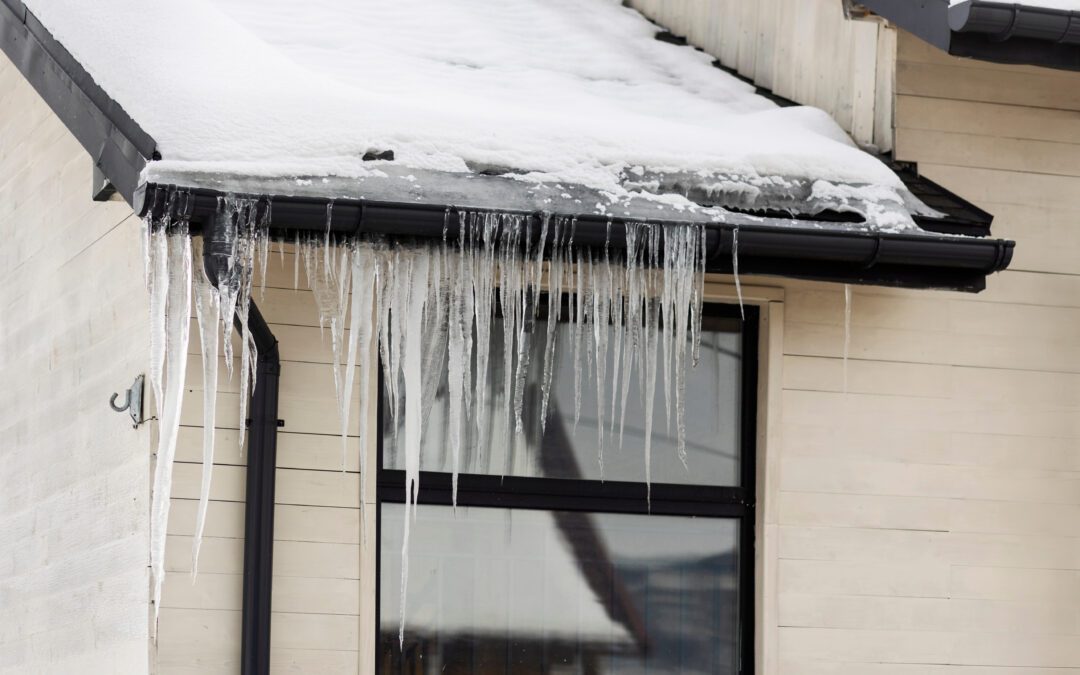
Ice along the roof edge is frustrating anywhere, but garages make it feel personal. The drip line freezes over your driveway, icicles hang above the garage door, and the first thaw turns into a skating rink right where you walk and park.
We see this pattern all over Central and Southern Maine. The good news is that you can usually reduce the risk without jumping straight to heat cable. Most lasting fixes start with the building, but your gutter system plays a real supporting role by keeping meltwater moving, keeping outlets clear, and sending water to a safer discharge point.
In this guide, we explain what causes ice dams, why garages are a hotspot, and how a properly designed seamless system can help. Ice dam prevention is never one single product. It is a plan that combines roof, attic, and drainage details so meltwater does not get the chance to refreeze at the edge.
If you want a fast, practical starting point, we outline what we install and maintain on our Services page.
Ice dam prevention for Maine garages: why the roof edge freezes first
An ice dam forms when snow melts higher on the roof, runs down, and refreezes at the colder eave. As the ridge grows, it can trap water behind it and push meltwater under shingles.
Building science research points to a simple driver behind that melt: the roof is warmer in some places than others. Common causes include insufficient insulation, thermal bridging, and air leaking into the space below the roof deck. These issues create a warm roof surface that melts snow even when outdoor temperatures stay below freezing. You can read a clear breakdown in Building Science Corporation’s digest on how ice dams form.
One detail that surprises many homeowners is that ice dams can form even when it stays cold outside. If parts of the roof are warmed by heat loss from the home, warm ducts or piping, or even uneven snow thickness and sun exposure, snow can melt higher up and refreeze at the colder overhang. Building Science Corporation lists air leakage and insufficient insulation among the most common drivers.
Garage roof edges stack the deck for this pattern. Garages often have thinner insulation, more air leaks, and more thermal bridging than the rest of the house. Add a roof valley that dumps water onto the garage eave, and you get a concentrated stream of meltwater that wants to refreeze right at the gutter line.
That is why we approach garage icing as a system problem. We want the attic and ceiling plane to stay tight and well insulated, and we want the meltwater pathway to stay open and predictable once a thaw starts.
Garages are especially prone because they sit at the intersection of temperature shifts and roofline changes:
The garage may be unheated, while a room above it is heated.
The ceiling plane over a garage is often leakier, especially around hatches, pull-down stairs, and penetrations.
Roof geometry can concentrate meltwater over the garage, especially at valleys and step-down roofs.
Downspouts often discharge toward the driveway, where runoff refreezes.
How to prevent ice dams without expecting gutters to do the whole job
We want to be direct about what gutters can and cannot do. Gutters do not cause the temperature difference that creates an ice dam. Insulation and air sealing do that job.
What gutters can do is reduce the secondary problems that make edge ice bigger and more destructive. Once meltwater exists, the question becomes: can it move away quickly, or will it pool and refreeze at the roof edge?
A seamless gutter system helps because it is built in continuous runs, with fewer joints and fewer snag points for debris. Fewer snag points usually means fewer mid-season clogs. Fewer clogs means fewer winter overflows that freeze into thick ice along the fascia. Our winter guidance focuses on this “fix the cause” approach, because the goal is to remove bottlenecks and reduce standing water rather than chasing symptoms. See our winter checklist in Winter Gutter Maintenance in Maine.
If your goal is to prevent ice dams, think of gutters as the last part of the path. They should be sized, pitched, supported, and kept clear so they do not become the place where meltwater gets stuck. To prevent ice dams over a garage, that “last part” often matters more than homeowners expect because the discharge point is usually the driveway.
The meltwater pathway: six design choices that reduce edge icing
When we assess a home, we look at the full path meltwater takes. That path starts on the roof and ends where the downspout discharges. If any part of that path creates a bottleneck, water slows down, pools, and refreezes. That is when a small edge-ice issue turns into a repeating winter pattern.
Here are six design choices that matter most in Maine, especially on garage rooflines.
1) Pitch that drains, not “almost drains”
A gutter that holds standing water becomes an ice tray during the first hard freeze. During installation, we set a consistent pitch toward the outlet and correct low spots early so they do not turn into permanent freeze zones. After the first couple of storms, we also recommend a quick check for sections that “hang on” to water when the rest of the run is dry.
2) Outlet placement for valleys and long garage runs
One long run feeding one downspout can back up during thaws. When valleys dump onto the garage edge, we often plan a nearby exit so water does not need to travel the full length of the gutter before it can leave. In practice, this can mean adding a second outlet, moving an outlet closer to a valley, or breaking an extra-long run into two shorter drainage paths.
3) Downspout sizing and elbow choices that resist freeze plugs
Elbows are a common choke point. Smooth turns, solid strapping, and sizing that matches the roof area help water and small debris move through instead of forming a plug that forces water back to the eave. We also look at the “first elbow” near grade. If it sits in a spot where snowbanks pile up, it can freeze shut even when the upper system is clean.
4) Discharge planning that avoids driveway refreeze
Garage discharge is often the most hazardous spot because it is directly above hard surfaces. When possible, we route water away from driveways and walkways with safe extensions or other solutions so thaws do not create ice sheets where you park and walk. If the only practical discharge path is toward the driveway, we talk through ways to get water past the slick zone and into open ground.
5) Hanger spacing and fastening that keeps lines straight under snow weight
If the gutter line flexes, pitch changes and low spots form. We use hidden hangers and fastening patterns designed for Maine exposure, and we tighten support where loads concentrate, especially near corners, downspouts, and valley zones. For a deeper explanation, see The Right Hanger Spacing for Snow and Wind.
6) Debris control before winter, including guard compatibility
A partially clogged outlet in October can become a freeze plug in January. We plan late-fall cleaning and, where it fits, guard strategies that reduce fine debris. Our guide to gutter guards in Maine covers the tradeoffs, including how micro-mesh behaves under pine needles and roof grit.
With fewer seams and ridges, seamless systems give debris fewer places to snag and make cleanouts faster. For the full comparison, read Why Seamless Gutters in Maine Are Superior to Traditional Options.
The garage checklist: failure points we look for during an estimate
Garages are a repeat offender for edge ice. When we do a walk-around, we look for patterns that predict winter problems.
Roof and attic indicators:
A room above the garage, especially if the floor above is cold or drafty.
Attic access in the garage, such as pull-down stairs or a hatch with poor sealing.
Recessed lights or wiring penetrations in the garage ceiling plane.
Valleys or step-down roofs that concentrate runoff over the garage.
Gutter and downspout indicators:
One long run feeding one downspout.
Downspout discharge aimed at the driveway or a walkway.
Elbows that are bent, dented, or buried behind a winter snowbank.
Evidence of past overflow, such as staining on fascia or ice ridges along the gutter edge.
We also look for small clues that the roof edge has been fighting this battle for years, even if the homeowner has not connected the dots yet. These include a repeating “ice line” along one gutter run, fascia paint that peels in a narrow band, and downspout outlets that leave a glazed patch on the driveway after every thaw.
During an estimate, we document:
Where roof planes and valleys concentrate water over the garage.
Whether the gutter pitch is consistent and draining toward the outlet.
Whether outlets and downspouts are sized and placed to keep flow moving during thaws.
Where discharge lands, and whether it is likely to refreeze on hard surfaces.
Signs of past overflow or ice buildup along the fascia and siding.
Our goal is to give you a clear, photo-backed explanation of the pattern, plus a plan you can act on.
The fixes that matter most are often inside the home
If you want true ice dam prevention, the most important work is usually air sealing and insulation. Efficiency Maine summarizes this clearly: the best defense is prevention, and that prevention is largely about minimizing heat loss so roof temperatures stay more consistent. Their overview is worth reading: Weatherization Tips From the Ground Up.
Building Science Corporation makes a similar point. Their guidance emphasizes that air leakage into roof cavities and insufficient insulation are among the most common causes of ice dams. In plain terms, your roof edge is not the “problem spot.” It is the place where a heat-loss problem becomes visible.
For garage-related icing, the highest-leverage fixes often include:
Air sealing the ceiling plane between the garage and attic space.
Sealing attic hatches and pull-down stair openings.
Addressing obvious bypasses, such as penetrations for lights, fans, and wiring.
Adding insulation to meet your home’s needs, especially over garage ceilings.
Confirming proper ventilation pathways, if your roof assembly is vented.
Garage-adjacent problem areas we encourage homeowners to check, or to ask a weatherization contractor to evaluate, include:
The attic hatch or pull-down stairs above the garage, including weather stripping and insulation on the cover.
Recessed lights, fans, and other ceiling penetrations that can leak warm air.
The rim-joist and wall transitions above the garage, where air sealing is often missed.
Any ductwork, piping, or mechanical runs near the roof deck that add localized heat.
When these leaks are sealed and insulation is brought up to a strong standard, the roof surface stays colder and more uniform. That reduces melt at the source and makes the gutter and downspout job much easier.
These improvements also help keep rooms above garages warmer and often less drafty.
If you want a Maine-specific overview of common fixes, Efficiency Maine’s air sealing page is also a helpful primer.
What to do during a bad ice-dam winter, without wrecking your roof
If you already have heavy edge ice, the first goal is safety. Avoid climbing ladders on icy ground or trying to chip ice out of gutters. Chiseling can damage shingles, bend gutters, and create sharp edges.
Instead, start with low-risk steps:
Mark off the danger zone below icicles and keep people away from the drop area.
Clear snowbanks that are blocking downspout discharge, if you can do so safely from the ground.
Check for obvious downspout blockages at the lowest elbow, again from the ground when possible.
Use a roof rake carefully to reduce roof snow load near the eave, following manufacturer guidance for your roof type.
If you have active leaks inside the home or you see water backing up under shingles, call a qualified professional for removal and mitigation. In the meantime, protect the interior by catching drips, moving valuables away from wet areas, and taking photos so you can describe what you saw after the storm.
We also get asked about heat cable. There are narrow cases where a targeted cable installation can reduce recurring freeze points, especially at a problem downspout line. Still, we treat it as a tool, not the plan. Our winter maintenance article explains why we start with clearing flow paths and fixing heat loss first.
If garage icing is a recurring issue, a short note after each storm can help us diagnose it quickly. Write down where the thickest ice formed, how far it extended, and whether the downspout discharge area turned slick. Patterns like these often point directly to one valley, one outlet, or one discharge path that needs to change.
Ready for a garage-focused ice dam prevention plan
If your garage roof edge is the one that always ices first, we can help you build a clearer plan. Start with our seamless gutter installation services, then review our winter maintenance approach and our hanger spacing guidance so you know what we look for and why.
When you schedule a free estimate, we will map your rooflines, valleys, outlets, and discharge points. We will also point out any building-envelope signs that make edge icing more likely. From there, we can recommend a seamless design that keeps meltwater moving and reduces the conditions that create recurring edge ice.
Ice dam prevention is a combination of attic performance and good drainage design. If you want fewer surprises during the first thaw, we can help you get both parts working together.
Recent Comments